
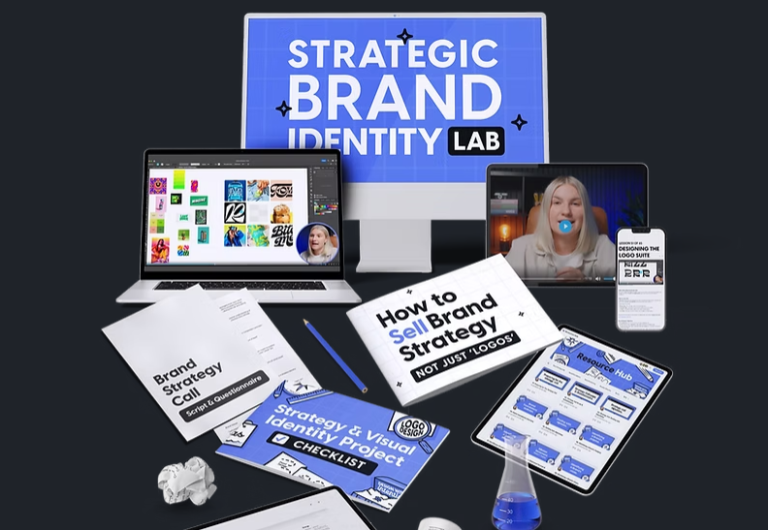
Abi Connick – Strategic Brand Identity Lab Review, Insights & Complete Breakdown
Building a successful business today requires much more than a logo or a beautiful website. Brands that truly dominate their industries are built on strategic positioning, emotional connection, audience trust, and consistent identity systems. This is exactly where Abi Connick – Strategic Brand Identity Lab stands out as a transformative learning experience for entrepreneurs, designers, creative agencies, and personal brands seeking clarity and authority in a competitive market.
The digital branding landscape has evolved dramatically over the last few years. Customers no longer buy products alone — they buy stories, values, experiences, and emotional alignment. Businesses that fail to create a recognizable and authentic identity often struggle to stand out, even when their products are excellent. Strategic branding bridges that gap between visibility and long-term loyalty.
This comprehensive program focuses on helping individuals create intentional, research-driven, and emotionally resonant brand identities that align with business goals and audience psychology. Rather than relying on random design trends or temporary marketing tactics, the framework emphasizes sustainable brand development that can grow alongside a business.
Why Strategic Brand Identity Matters More Than Ever
Modern consumers are exposed to thousands of marketing messages every single day. Attention spans are shorter, competition is stronger, and trust has become one of the most valuable currencies online. A strong brand identity creates familiarity, professionalism, and emotional recognition that influence purchasing decisions.
A carefully developed identity system helps businesses:
- Build stronger customer trust
- Improve audience recognition
- Create emotional brand loyalty
- Increase perceived value
- Maintain visual consistency
- Communicate authority clearly
- Differentiate from competitors
- Strengthen long-term marketing performance
Without strategy, branding often becomes inconsistent and forgettable. Businesses end up changing visuals repeatedly, confusing customers, and weakening their market positioning. Strategic identity development solves this issue by creating a cohesive foundation that supports every marketing effort moving forward.
Core Focus of Abi Connick – Strategic Brand Identity Lab
One of the biggest strengths of this training is its strategic approach. Instead of teaching surface-level branding techniques, the program dives deep into the psychology and structure behind successful identity systems.
The learning experience is centered around several important pillars:
Brand Positioning
Brand positioning defines how a business wants to be perceived in the market. It establishes a clear space within the customer’s mind and differentiates the company from competitors.
This includes:
- Audience analysis
- Competitor research
- Brand messaging
- Market differentiation
- Value proposition development
- Brand personality creation
A business with strong positioning instantly feels more professional and trustworthy because its communication becomes focused and intentional.
Visual Identity Development
Visual branding is often the first impression customers receive. The program emphasizes building a complete visual ecosystem rather than creating disconnected assets.
Important visual identity components include:
- Logo systems
- Typography selection
- Brand color psychology
- Design hierarchy
- Visual consistency
- Brand application systems
- Social media branding
- Website visual structure
The goal is to ensure every visual element communicates the same emotional and strategic message.
Messaging & Brand Voice
Visuals alone cannot carry a brand. Messaging plays a major role in customer connection and conversion. Many businesses struggle because their communication lacks clarity or emotional resonance.
The framework explores:
- Tone of voice development
- Messaging consistency
- Customer psychology
- Storytelling structure
- Emotional branding
- Communication strategy
- Audience trust building
When messaging aligns with visuals and positioning, brands become significantly more memorable.
Who Can Benefit From This Program
The strategies taught inside this branding system are valuable for multiple types of professionals and businesses.
Freelance Designers
Freelance creatives often struggle to move beyond low-paying design projects because they focus only on aesthetics rather than strategy. Learning brand strategy allows designers to position themselves as high-value consultants instead of simple service providers.
This can help:
- Increase pricing
- Attract premium clients
- Improve portfolio quality
- Deliver stronger client results
- Build long-term client relationships
Creative Agencies
Agencies benefit from implementing structured branding systems that improve workflow, consistency, and client satisfaction. Strategic processes create more predictable outcomes and elevate agency positioning within the market.
Small Business Owners
Entrepreneurs launching a new brand frequently lack clarity around identity and positioning. This creates inconsistent marketing and weak customer recognition.
A strategic framework helps businesses:
- Launch with confidence
- Maintain consistency
- Build authority faster
- Improve customer perception
- Create stronger marketing campaigns
Personal Brands & Coaches
Influencers, educators, consultants, and coaches rely heavily on personal branding. A clear identity system allows them to stand out in crowded digital spaces while building audience trust.
Strong personal branding improves:
- Audience connection
- Authority perception
- Course sales
- Community growth
- Long-term visibility
The Importance of Brand Psychology
One of the most overlooked aspects of branding is psychology. Successful brands understand how people emotionally react to visuals, language, colors, structure, and consistency.
Consumers make emotional decisions first and logical decisions second. Strategic branding leverages this behavior by creating familiarity, emotional alignment, and trust signals across every customer interaction.
For example:
- Certain colors influence emotional perception
- Typography affects professionalism
- Consistency increases trust
- Storytelling improves memorability
- Clarity reduces customer hesitation
A strategic branding framework combines these elements into one cohesive system that influences customer behavior naturally.
Building Long-Term Brand Authority
Many businesses chase short-term trends hoping for instant visibility. While trends can temporarily increase attention, they rarely build lasting authority.
Long-term brand authority is built through:
- Consistent messaging
- Reliable visual identity
- Audience trust
- Strategic positioning
- Emotional recognition
- Professional presentation
Brands that maintain consistency over time become easier to recognize and more difficult to replace within the customer’s mind.
This long-term approach is one of the major themes emphasized throughout the learning process.
Common Branding Mistakes Businesses Make
Many entrepreneurs unknowingly weaken their brands by making avoidable mistakes.
Inconsistent Visual Design
Using different colors, fonts, logo variations, and layouts across platforms creates confusion and weakens recognition.
Copying Competitors
Imitating industry leaders may feel safe, but it removes originality and makes businesses blend into the market instead of standing out.
Lack of Clear Messaging
If customers cannot quickly understand what a brand offers and why it matters, they usually move on immediately.
Designing Without Strategy
A visually attractive brand without positioning or audience research often fails to convert customers effectively.
Constant Rebranding
Frequently changing brand identity damages customer trust and recognition. Strategic systems help maintain consistency over time.
How Strong Branding Impacts Business Growth
Strategic branding is not just about appearance — it directly affects business performance.
A powerful identity system can improve:
- Customer trust
- Conversion rates
- Marketing efficiency
- Audience retention
- Referral growth
- Social media engagement
- Perceived expertise
- Pricing power
Businesses with strong branding often require less effort to gain attention because their presentation communicates professionalism immediately.
The Evolution of Modern Brand Identity
Brand identity today extends far beyond traditional graphic design. Modern branding includes every customer interaction and experience.
This includes:
- Website experience
- Social media presence
- Email communication
- Packaging design
- Content strategy
- Customer onboarding
- Community interaction
- Educational content
- Brand storytelling
Every touchpoint contributes to audience perception.
A strategic branding framework ensures these touchpoints remain aligned and intentional rather than disconnected.
Why Strategic Branding Creates Competitive Advantage
In saturated industries, products and services often become similar. Branding becomes the primary differentiator.
Customers usually choose brands they:
- Recognize easily
- Trust emotionally
- Connect with personally
- Remember consistently
- Perceive as professional
This emotional advantage creates stronger customer loyalty and reduces price sensitivity.
Strategic identity development allows businesses to compete on value rather than price alone.
Creating a Memorable Customer Experience
Memorable brands are intentional about every interaction customers experience.
Successful identity systems focus on:
- Emotional consistency
- Visual familiarity
- Audience trust
- Clear communication
- Professional presentation
- Authentic storytelling
When customers repeatedly experience consistent branding, loyalty naturally increases over time.
Final Thoughts
Abi Connick – Strategic Brand Identity Lab offers a powerful approach to modern branding by combining strategy, psychology, visual identity, positioning, and audience connection into one cohesive framework.
Rather than focusing only on aesthetics, the program encourages deeper thinking around customer perception, emotional branding, and long-term authority building. This makes it valuable for freelancers, agencies, entrepreneurs, personal brands, and anyone looking to create a stronger presence in the digital marketplace.
As competition continues to grow online, businesses that invest in strategic branding gain a major advantage. A well-developed identity system not only improves recognition but also strengthens trust, customer loyalty, and overall business growth.
In today’s fast-moving digital economy, branding is no longer optional — it is one of the most important assets a business can build.




Reviews
There are no reviews yet.