
Introduction
Hair loss is one of the most discussed yet misunderstood biological conditions affecting both men and women. Despite countless products, myths, and opinions circulating online, very few resources truly explain what happens beneath the scalp at a scientific level. Speaking Truth – Hair Loss Scientific Deep Dive is designed to cut through misinformation and present a clear, evidence-based explanation of why hair loss occurs, how it progresses, and what science actually supports when it comes to prevention and treatment. This guide focuses on biology, dermatology, endocrinology, and lifestyle factors—without hype or exaggerated promises.
Understanding Hair Biology
Human hair grows from follicles embedded deep within the scalp. Each follicle functions as a mini-organ with its own blood supply, nerve endings, and hormonal receptors. Hair growth follows a predictable cycle that repeats continuously throughout life.
The Hair Growth Cycle
Anagen (Growth Phase):
This phase lasts between 2–7 years. Cells in the hair matrix divide rapidly, producing the hair shaft. The length of this phase determines maximum hair length.Catagen (Transition Phase):
A short phase lasting about 2–3 weeks. Cell division stops, and the follicle begins to shrink.Telogen (Resting Phase):
Lasting around 3 months, the hair remains in place but no longer grows. Eventually, the strand sheds naturally.Exogen (Shedding Phase):
Old hairs fall out to make room for new growth. Losing 50–100 hairs per day is considered normal.
Hair loss occurs when this cycle is disrupted—either by shortening the growth phase, prolonging the resting phase, or damaging the follicle itself.
The Science Behind Hair Loss
Hair loss is not caused by a single factor. Instead, it results from a complex interaction between genetics, hormones, immune responses, nutrition, and environmental stressors.
Genetic Influence
The most common form of hair loss is androgenetic alopecia. Genetics determine follicle sensitivity to certain hormones, particularly dihydrotestosterone (DHT). This sensitivity is inherited and varies from person to person.
Hormonal Mechanisms
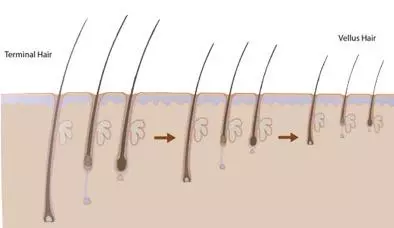
DHT is derived from testosterone through the enzyme 5-alpha-reductase. In genetically susceptible individuals, DHT binds to follicle receptors and causes gradual miniaturization. Over time, thick terminal hairs become thin, weak vellus hairs, eventually stopping growth entirely.
Inflammation and Microcirculation
Chronic scalp inflammation restricts blood flow and oxygen delivery to follicles. Reduced nutrient supply weakens the follicle’s ability to sustain healthy hair growth, accelerating hair thinning.
Types of Hair Loss Explained
Understanding the type of hair loss is essential for choosing effective interventions.
Androgenetic Alopecia
Progressive and patterned
Common in men and women
Hormone and gene-driven
Usually irreversible without early intervention
Telogen Effluvium
Triggered by stress, illness, surgery, or nutritional deficiencies
Causes diffuse shedding
Often reversible once the trigger is addressed
Alopecia Areata
Autoimmune condition
Immune cells attack hair follicles
Can cause patchy or complete hair loss
Hair regrowth is unpredictable
Traction Alopecia
Caused by prolonged tension from hairstyles
Common around hairlines
Preventable with lifestyle changes
Nutritional and Metabolic Factors
Hair follicles are metabolically active and require consistent nutritional support.
Key Nutrients for Hair Health
Protein: Keratin formation depends on amino acids
Iron: Essential for oxygen transport to follicles
Zinc: Regulates follicle recovery and oil glands
Vitamin D: Plays a role in follicle cycling
Biotin: Supports keratin infrastructure
Deficiencies can push follicles prematurely into the resting phase, increasing shedding.
Stress, Cortisol, and Hair Loss
Psychological stress elevates cortisol levels, which interferes with protein synthesis and blood flow. Chronic stress alters immune responses and disrupts the hair growth cycle, often resulting in excessive shedding months after the stressful event.
Scalp Environment and Hair Follicle Health
The scalp is skin, and its health directly impacts follicles. Sebum imbalance, fungal overgrowth, and blocked pores can suffocate follicles and impair growth.
Importance of Scalp Care
Regular cleansing prevents buildup
Maintaining pH balance reduces inflammation
Gentle exfoliation supports follicle openings
Evidence-Based Treatments
Science supports only a limited number of hair loss treatments.
Clinically Supported Options
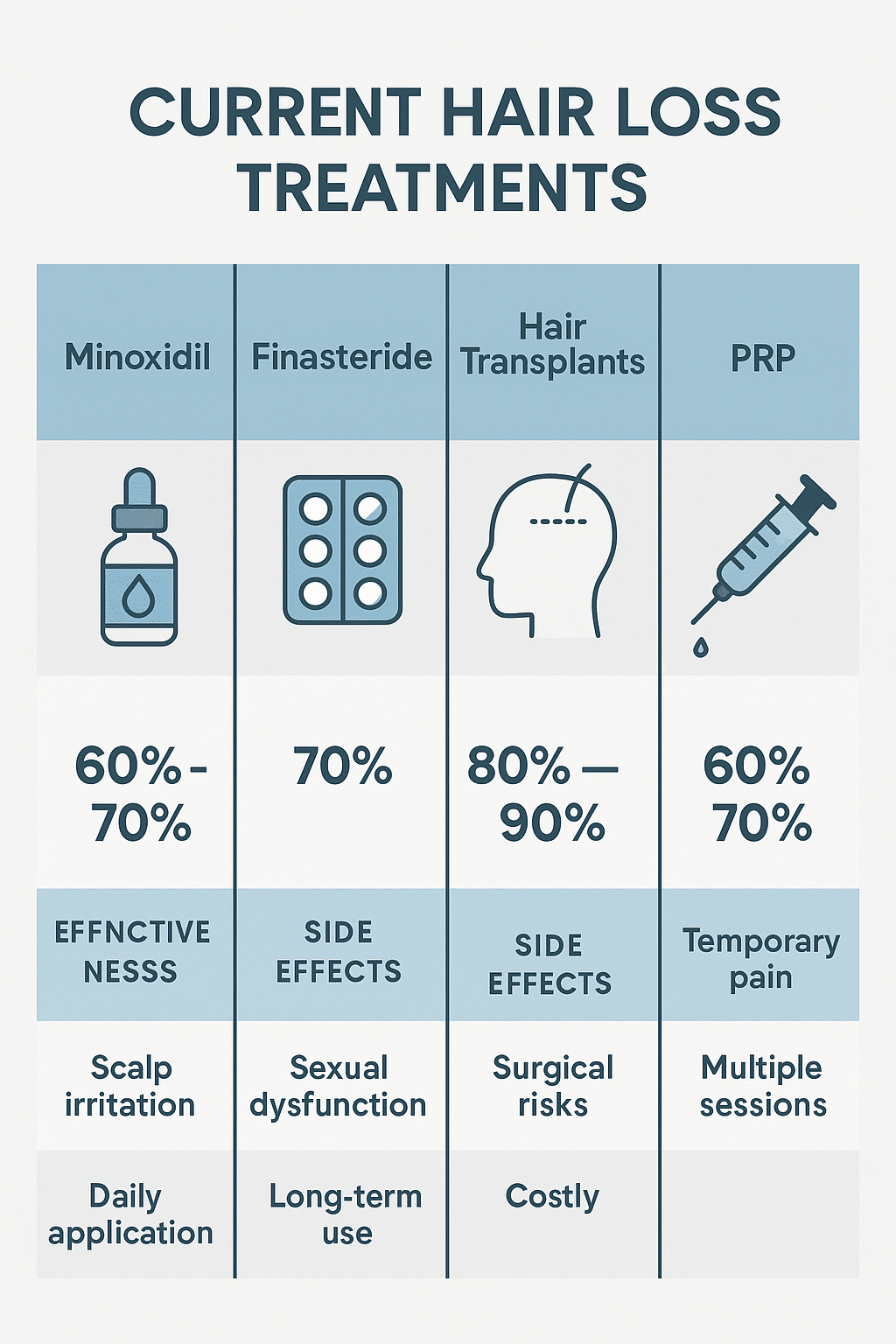
Minoxidil: Improves blood flow and prolongs anagen phase
Finasteride: Reduces DHT levels systemically
Low-Level Laser Therapy: Enhances cellular energy production
Microneedling: Stimulates growth factors and absorption
Results vary depending on genetics, consistency, and early use.
Myths vs Scientific Reality
Hair loss is often surrounded by myths that delay proper treatment.
Common Misconceptions
Frequent washing causes hair loss
Wearing hats restricts hair growth
Natural oils alone can regrow hair
Hair loss is always permanent
Scientific evidence contradicts these beliefs.
The Role of Aging
As we age, cellular regeneration slows, hormone levels change, and follicles lose resilience. While aging contributes to thinning, it often amplifies underlying genetic tendencies rather than causing hair loss independently.
Future Research and Innovations
Modern research focuses on stem cell activation, follicle cloning, gene modulation, and molecular signaling pathways. While promising, most experimental treatments are still under clinical investigation.

Final Thoughts
Hair loss is not a cosmetic mystery—it is a biological process governed by genetics, hormones, immune responses, and lifestyle factors. Understanding the science empowers individuals to make informed decisions rather than chasing ineffective solutions. Speaking Truth – Hair Loss Scientific Deep Dive aims to provide clarity, realism, and scientifically grounded knowledge in a field often clouded by marketing and misinformation.





Reviews
There are no reviews yet.