
Introduction
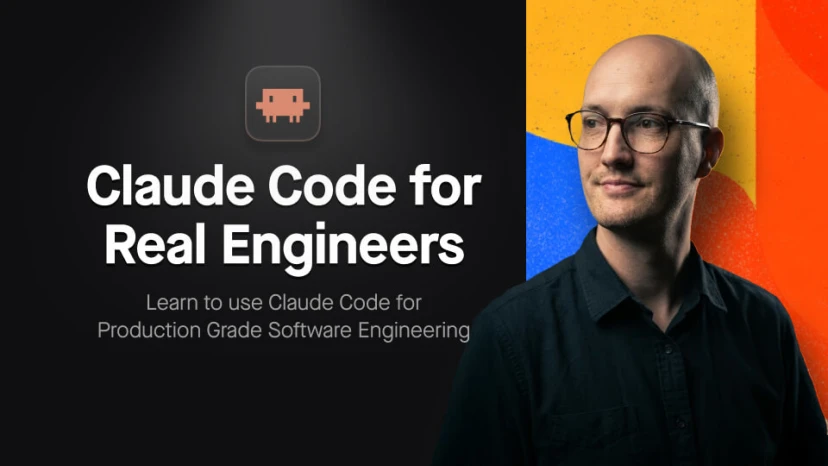
The way engineers write code is changing faster than ever. With the rise of AI-powered tools, the gap between idea and execution has shrunk dramatically. But while many developers experiment with AI casually, very few truly integrate it into a professional, production-grade workflow. That’s where Matt Pocock – Claude Code for Real Engineers stands out.
This approach isn’t about shortcuts or gimmicks—it’s about using AI as a serious engineering tool. It teaches developers how to collaborate with AI systems like Claude in a structured, scalable, and efficient way. Instead of replacing engineering skills, it amplifies them.
In this guide, you’ll explore how this methodology works, why it matters, and how you can apply it to become a more effective and future-ready engineer.
Who is Matt Pocock and Why This Matters
Matt Pocock is widely recognized for simplifying complex TypeScript concepts and making them accessible to developers. His teaching style focuses on clarity, practicality, and real-world application.
The philosophy behind Claude Code for Real Engineers reflects the same mindset:
- Focus on outcomes, not hype
- Build systems, not just snippets
- Think like an engineer, not just a coder
This is crucial because many developers misuse AI tools—either over-relying on them or under-utilizing their true capabilities.
The Core Philosophy
At its core, this framework is built on a simple idea:
AI is not a replacement for engineers—it’s a multiplier.
Instead of asking AI to “write code,” you guide it like a junior developer. You provide context, constraints, and expectations. The better your instructions, the better the output.
Key Principles
1. Context is Everything
AI performs best when it understands the full picture. That includes:
- Project structure
- Business logic
- Constraints
- Expected outcomes
2. Iterative Development
You don’t get perfect code in one prompt. Real engineers:
- Refine outputs
- Test continuously
- Improve step-by-step
3. Ownership of Code
Even when AI generates code, you are responsible for:
- Quality
- Security
- Performance
How Claude Changes the Engineering Workflow
Traditional coding workflow:
- Think
- Write
- Debug
- Refactor
With AI-assisted engineering:
- Define problem clearly
- Collaborate with AI
- Review and validate
- Optimize and integrate
This shift reduces time spent on repetitive tasks and increases focus on high-level thinking.
Practical Workflow Breakdown
Step 1: Define the Problem Clearly
Instead of vague prompts like:
“Create a login system”
You provide structured input:
- Tech stack (React, Node.js, etc.)
- Authentication method
- Security requirements
- Expected user flow
This dramatically improves output quality.
Step 2: Use Structured Prompts
A strong prompt includes:
- Objective
- Constraints
- Input/Output expectations
- Edge cases
Example structure:
Constraints:
– Use Node.js and Express
– Include validation
– Handle errors properly
– Return structured JSON responses
Step 3: Review Like a Senior Engineer
Never blindly trust generated code. Always check:
- Logic correctness
- Security vulnerabilities
- Code readability
- Scalability
Step 4: Iterate and Improve
Refinement is where real power lies. You can ask:
- Optimize performance
- Improve readability
- Add edge case handling
- Convert to TypeScript
Real Engineering Use Cases
1. Building Full Features Faster
Instead of writing everything manually:
- Generate base implementation
- Refine with custom logic
- Integrate into system
This can cut development time significantly.
2. Debugging Complex Issues
AI can:
- Analyze error logs
- Suggest fixes
- Explain root causes
This is especially helpful in large codebases.
3. Learning While Building
Unlike static tutorials, AI provides:
- Context-aware explanations
- Real-time feedback
- Custom examples
4. Writing Documentation
You can generate:
- API documentation
- Code comments
- README files
This improves team collaboration and maintainability.
Common Mistakes Engineers Make
Even experienced developers misuse AI. Here are the biggest pitfalls:
1. Vague Prompts
Leads to generic and unusable output.
2. Over-Reliance
Blindly trusting AI without validation is dangerous.
3. Ignoring Context
Without full project details, results are incomplete.
4. No Iteration
First output is rarely the best output.
Advanced Techniques
Prompt Engineering for Developers
Instead of simple instructions, use layered prompts:
- Start broad
- Narrow down
- Refine details
Chain of Thought Workflows
Break tasks into smaller steps:
- Plan
- Generate
- Review
- Optimize
Code Refactoring with AI
You can:
- Convert JavaScript to TypeScript
- Improve performance
- Apply design patterns
Testing and Validation
AI can help generate:
- Unit tests
- Integration tests
- Edge case scenarios
But always verify test accuracy.
Why This Approach is Future-Proof
The future of engineering isn’t about writing more code—it’s about solving problems faster and better.
Engineers who succeed will:
- Know how to guide AI
- Understand system design deeply
- Focus on high-level thinking
This approach prepares you for that shift.
Benefits for Real Engineers
1. Increased Productivity
Spend less time on boilerplate and more on logic.
2. Better Code Quality
With proper review, AI can improve consistency.
3. Faster Learning Curve
Explore new technologies quickly.
4. Competitive Advantage
Engineers who master AI workflows stand out.
How to Start Today
You don’t need a complex setup. Start simple:
- Pick a small project
- Use AI to assist—not replace
- Practice structured prompting
- Review everything carefully
- Iterate continuously
Consistency is key.
Final Thoughts
Matt Pocock – Claude Code for Real Engineers isn’t just a concept—it’s a shift in mindset. It moves developers away from manual, repetitive coding and toward intelligent, collaborative problem-solving.
The engineers who thrive in this new era won’t be the ones who write the most code. They’ll be the ones who understand how to leverage tools effectively while maintaining strong fundamentals.
If you approach AI with discipline, clarity, and an engineering mindset, it becomes one of the most powerful tools in your arsenal.




Reviews
There are no reviews yet.