
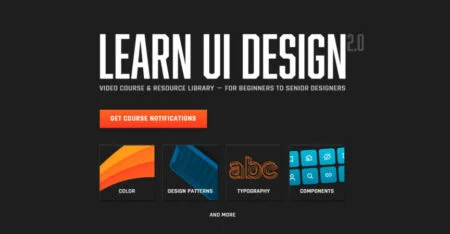
Erik Kennedy – Learn UI Design
Introduction
User Interface (UI) design has become one of the most in-demand skills in the digital industry. Every app, website, SaaS platform, and digital product depends on great user experiences to grow. Companies are constantly looking for UI designers who understand user psychology, visual hierarchy, layout balance, color systems, typography, spacing, and usability. That’s why learning UI design today opens huge career opportunities — from freelance remote projects to full-time roles in tech.
Many beginners feel UI design is only about making screens look attractive. In reality, it is about clear communication, meaningful interaction, and helping users reach their goals effortlessly. If you want to build a strong career in design, you need structured learning — not just random YouTube videos. A professional approach helps you create designs with purpose, confidence, and industry-level quality.
In this complete guide, you will learn how skills like layout design, colors, typography, grids, and design tools come together to create interfaces that users love. You will also understand how designers think, solve problems, and design fully-functional digital products from scratch.
Why UI Design Matters Today
Businesses compete not only on features — but on usability. A confusing interface can lead to user frustration and loss of customers, no matter how good the idea behind the product is. Great UI design:
Builds trust instantly
Makes a product easy to navigate
Improves conversion and retention
Enhances brand identity
Reduces support costs
Helps users achieve more with less effort
When a design looks clean and feels intuitive, users enjoy interacting with the product. This is where professional UI designers make a powerful impact.
What You Need to Become a Strong UI Designer
You don’t need to be a perfect artist or have a background in design. You need:
✔ Curiosity
✔ Willingness to learn
✔ Practice with real projects
✔ Understanding design rules
✔ Feedback from professionals
UI design is a learnable skill that improves with consistent practice. You will learn how to see design differently — noticing patterns, visual weight, alignment, and proportions everywhere.
Core Skills You Will Learn
Professional UI designers master specific areas:
1️⃣ Typography Skills
Typography is how text communicates visually. You learn:
Font pairing rules
Readability and accessibility
Hierarchy through size, weight, and spacing
Line height and tracking for clarity
Good typography alone can make a design look premium.
2️⃣ Color Mastery
Color influences emotions and brand identity. You’ll explore:
Contrast for readability
Color psychology
Accessible color palettes
Light vs. dark mode adaptation
Color should support usability, not just decoration.
3️⃣ Layout & Grids
Layouts structure information clearly. You learn:
Grid systems for alignment
White space for breathing room
Scannable, balanced composition
Prioritizing what users must see first
This is where visual hierarchy becomes powerful.
4️⃣ Components & Design Systems
Reusable UI elements build consistency. You’ll create:
Buttons, forms, cards, dropdowns
Modular layout patterns
Scalable design systems for teams
This saves time and ensures a unified brand experience.
5️⃣ Tools & Workflows
Modern UI design uses tools like:
Figma
Sketch
Adobe XD
FigJam for brainstorming
You learn professional workflows — wireframes, prototyping, user testing, and developer handoff.
Real-World UI Design Process
Here’s how professional UI designers work:
Understanding requirements — user goals, business needs
Research and inspiration — studying design patterns
Wireframe creation — focusing only on structure and flow
High-fidelity visual design — applying colors, spacing, patterns
Component creation — scalable elements for every screen
Prototype interactions — clickable product experience
Feedback and iteration — improving usability
Developer handoff — exporting assets and specs
This process makes sure every product is useful, functional, and beautiful.
Building a Portfolio to Get Hired
Beginners often worry: “I don’t have experience, who will hire me?”
But strong portfolios don’t need client work — they need good case studies.
A perfect UI case study includes:
Problem explanation
Target users
Design decisions (why not just how)
Before/after comparisons
Interactive prototype
Lessons learned
Employers want designers who can think, not just decorate screens.
Job Opportunities After Learning UI Design
Once you build strong skills, you can work as:
UI Designer
Product Designer
UX/UI Designer
Web & App Interface Designer
Design System Specialist
Freelance Designer
Salaries vary by country but often grow quickly as you gain experience. Remote opportunities also allow you to work with global clients.
Why Practice Matters More Than Tools
Many beginners focus on tools — but tools don’t make someone a designer.
Skills like spacing, alignment, contrast, consistency, and usability are what separate amateur from expert work.
Your growth depends on:
🔥 Designing daily
🔥 Learning visuals from real products
🔥 Studying feedback
🔥 Mastering rules before breaking them
The more you create, the better you see.
Tips to Accelerate Your UI Career
Here are powerful tips followed by successful designers:
Study and recreate top apps for practice
Avoid clutter — simplicity is always winning
Think mobile-first, then scale for desktop
Learn accessibility guidelines (WCAG)
Join design communities for feedback
Keep updating your portfolio
Follow UI trends but design for usability
Confidence comes from doing, not waiting.
Final Thoughts
UI design is a highly rewarding career with endless possibilities. Every industry — finance, healthcare, travel, education, e-commerce — needs intuitive, beautiful digital interfaces. With structured learning, guidance, and consistent practice, you can transform into a professional designer even if you start from zero.
Many beginners feel overwhelmed at first, but that’s normal. As you learn to see patterns, solve user problems, and apply design principles correctly, your work improves dramatically. Whether you want freelance income, remote projects, or a full-time tech job, UI design is a skill that will keep growing in value for the future.
If you commit to the journey, UI design can turn into a creative, high-earning career with global opportunities.




Reviews
There are no reviews yet.