
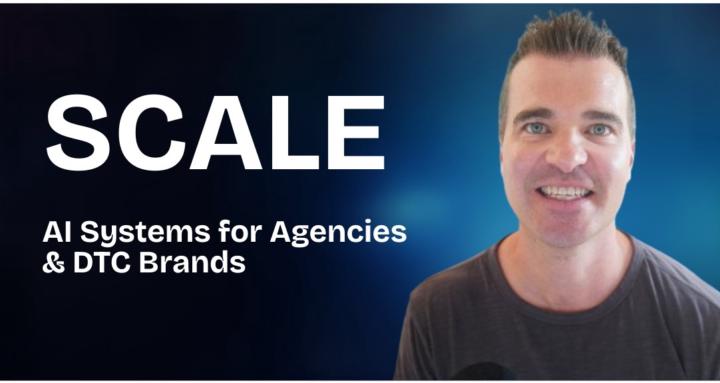
Mike Futia – SCALE – AI for DTC & Agencies
In the rapidly evolving world of digital commerce, brands and agencies are constantly searching for smarter, faster, and more scalable ways to grow. One name that has been gaining attention in this space is Mike Futia, known for building high-performance systems that blend data, automation, and artificial intelligence. His SCALE framework is designed specifically for direct-to-consumer (DTC) brands and agencies that want to unlock consistent, predictable growth using AI-driven strategies.
This in-depth guide breaks down the philosophy, structure, and real-world application of this powerful system—helping you understand why it’s becoming a go-to approach for modern digital businesses.
What is SCALE – AI for DTC & Agencies?
SCALE is not just another marketing framework—it is a structured growth system that integrates artificial intelligence into every stage of the customer journey. Built for DTC brands and performance agencies, it focuses on optimizing operations, marketing, and decision-making through automation and data intelligence.
At its core, the framework is designed to:
- Eliminate guesswork in marketing decisions
- Automate repetitive tasks
- Increase conversion rates through data-backed strategies
- Improve customer lifetime value (LTV)
- Scale campaigns efficiently without increasing costs proportionally
Unlike traditional marketing methods, SCALE emphasizes leveraging AI tools to enhance human decision-making rather than replace it.
Why AI is Transforming DTC and Agency Growth
Before diving deeper into the system, it’s important to understand why AI is such a game-changer for DTC brands and agencies.
1. Data Overload Becomes Actionable Insight
Modern businesses generate massive amounts of data. AI helps filter, analyze, and extract meaningful insights that can drive smarter decisions.
2. Personalization at Scale
AI enables hyper-personalized marketing campaigns—delivering the right message to the right audience at the right time.
3. Faster Decision-Making
Instead of waiting days or weeks for campaign results, AI provides real-time feedback and optimization suggestions.
4. Cost Efficiency
Automation reduces manual work, saving both time and operational costs while improving performance.
Breaking Down the SCALE Framework
The SCALE system is structured into five key pillars. Each plays a crucial role in building a scalable and sustainable business model.
S – Systems & Automation
The foundation of the framework begins with building efficient systems. Without proper infrastructure, scaling becomes chaotic and unsustainable.
This phase focuses on:
- Automating workflows
- Streamlining operations
- Integrating tools and platforms
- Reducing manual errors
For DTC brands, this could mean automating order processing, email sequences, and customer support. For agencies, it involves automating reporting, client onboarding, and campaign tracking.
The goal is simple: create a machine that runs smoothly without constant human intervention.
C – Customer Data Intelligence
Data is the backbone of any successful growth strategy. This stage focuses on collecting, organizing, and analyzing customer data to uncover actionable insights.
Key elements include:
- Customer segmentation
- Behavioral tracking
- Purchase pattern analysis
- Predictive modeling
By understanding customer behavior deeply, brands can tailor their marketing strategies to increase conversions and retention.
Agencies can use this data to provide more accurate targeting and better ROI for their clients.
A – AI-Powered Marketing
This is where the real transformation happens. AI tools are used to optimize marketing efforts across multiple channels.
Applications include:
- Automated ad optimization
- AI-generated creatives and copy
- Predictive audience targeting
- Smart bidding strategies
Instead of relying on trial and error, AI continuously learns and improves campaign performance.
For example, AI can identify which creatives perform best and automatically allocate budget accordingly—maximizing results without manual effort.
L – Lifecycle Optimization
Acquiring customers is only half the battle. The real profit comes from retaining and maximizing the value of each customer.
This stage focuses on:
- Email and SMS automation
- Upsell and cross-sell strategies
- Customer retention campaigns
- Loyalty programs
AI helps identify when customers are likely to churn and triggers automated campaigns to re-engage them.
For agencies, this means delivering long-term value to clients instead of just short-term wins.
E – Expansion & Scaling
Once the system is optimized, the final step is scaling. This involves expanding successful strategies across new markets, channels, and audiences.
Key strategies include:
- Scaling ad spend intelligently
- Expanding to new platforms
- Entering new geographic markets
- Increasing product offerings
The difference here is that scaling is done based on proven data, not assumptions—reducing risk and increasing success rates.
Benefits of Implementing SCALE
Businesses that adopt this system can experience significant improvements in performance and efficiency.
1. Predictable Growth
With data-driven insights and automation, growth becomes more consistent and less dependent on guesswork.
2. Higher ROI
AI optimizes campaigns in real-time, ensuring better results with lower costs.
3. Time Savings
Automation frees up time, allowing teams to focus on strategy rather than repetitive tasks.
4. Better Customer Experience
Personalized interactions lead to higher satisfaction and stronger brand loyalty.
5. Scalability Without Chaos
Structured systems ensure that growth doesn’t lead to operational breakdowns.
Real-World Applications
For DTC Brands
- Automating product recommendations
- Optimizing ad campaigns with AI
- Improving retention through lifecycle marketing
- Scaling profitable products faster
For Agencies
- Managing multiple clients efficiently
- Delivering data-driven strategies
- Automating reporting and analytics
- Increasing client retention and satisfaction
Common Mistakes to Avoid
While the framework is powerful, improper implementation can limit results.
1. Over-Reliance on Tools
AI is powerful, but it still requires human strategy and oversight.
2. Ignoring Data Quality
Poor data leads to poor decisions. Clean and accurate data is essential.
3. Skipping the Foundation
Without proper systems and automation, scaling efforts can fail.
4. Lack of Testing
Even with AI, continuous testing and optimization are necessary.
Who Should Use This System?
This framework is ideal for:
- DTC brands looking to scale profitably
- Marketing agencies managing multiple clients
- E-commerce entrepreneurs seeking automation
- Growth marketers focused on data-driven strategies
Whether you’re a startup or an established business, the principles can be adapted to fit your needs.
Future of AI in DTC and Agencies
The integration of AI into business operations is only going to deepen. As tools become more advanced, businesses that adopt early will have a significant competitive advantage.
Future trends include:
- Fully automated marketing funnels
- Advanced predictive analytics
- Voice and conversational commerce
- AI-driven product development
The SCALE framework positions businesses to adapt to these changes effectively.
Final Thoughts
The digital landscape is becoming more competitive every day. Traditional marketing methods are no longer enough to sustain long-term growth. Systems like SCALE provide a structured, intelligent approach to scaling businesses using AI.
By focusing on automation, data intelligence, and lifecycle optimization, brands and agencies can build a growth engine that is both efficient and sustainable.
If implemented correctly, this framework can transform how businesses operate—turning complexity into clarity and effort into efficiency.


Reviews
There are no reviews yet.