
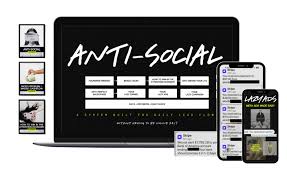
Passive Rebel – AntiSocial
Introduction: The Rise of the Quiet Rebel
In a world dominated by noise, opinions, and constant social validation, a new kind of personality has emerged — the Passive Rebel – AntiSocial. Unlike traditional rebels who protest loudly and seek attention, this individual chooses silence, distance, and independence as their weapon.
They don’t argue, they don’t explain, and they certainly don’t conform. Instead, they move differently — calmly rejecting societal expectations without needing approval or recognition.
This mindset is not about being rude or disconnected. It’s about self-control, clarity, and choosing peace over chaos.
What Does Passive Rebel – AntiSocial Really Mean?
The term combines two powerful ideas:
Passive Rebel → Someone who resists norms quietly without confrontation
AntiSocial (in a modern sense) → Someone who avoids unnecessary social interaction, not out of fear but by choice
Together, it forms a personality that:
Rejects unnecessary drama
Avoids validation-seeking behavior
Focuses on inner growth instead of outer noise
This is not weakness — it’s controlled detachment.
The Psychology Behind Passive Rebellion
Most people are conditioned to follow the crowd:
Seek approval
Fear rejection
Chase trends
But a Passive Rebel breaks this pattern.
Key Psychological Traits:
High self-awareness → Knows what they want
Emotional independence → Doesn’t rely on others for validation
Selective energy use → Chooses where to invest time and attention
Low need for approval → Doesn’t seek praise
They don’t rebel loudly because they don’t need to prove anything.
Why Being AntiSocial is Becoming Powerful
Earlier, being antisocial was seen negatively. But today, it represents something deeper — control over your environment and attention.
Reasons for its rise:
1. Digital Overload
People are tired of:
Social media pressure
Fake interactions
Constant comparison
Choosing distance becomes a form of protection.
2. Energy Preservation
Not every conversation deserves your attention.
Passive rebels understand:
Energy is currency — spend it wisely.
3. Clarity Over Chaos
When you reduce noise, you gain:
Better decision-making
Mental peace
Stronger focus
Signs You Are a Passive Rebel – AntiSocial
You may already have this personality if:
You avoid unnecessary conversations
You prefer silence over small talk
You don’t follow trends blindly
You don’t seek attention online
You value your time deeply
You don’t explain your choices to everyone
This isn’t isolation — it’s intentional living.
Passive Rebel vs Loud Rebel
| Trait | Passive Rebel | Loud Rebel |
|---|---|---|
| Approach | Silent resistance | Open confrontation |
| Energy use | Minimal & focused | High & scattered |
| Validation | Internal | External |
| Impact | Deep & long-term | Immediate but short-term |
The Passive Rebel wins because they don’t waste energy proving a point.
The Power of Silence
Silence is often misunderstood as weakness.
But for the Passive Rebel – AntiSocial, silence is strategy.
Benefits of Silence:
Avoids unnecessary conflict
Builds mystery and respect
Increases observation skills
Strengthens emotional control
Sometimes, the strongest message is:
Saying nothing at all.
How This Mindset Helps in Success
This personality type has a major advantage in today’s distracted world.
1. Deep Focus
Without constant social distractions, they can:
Build skills faster
Work longer without burnout
Stay consistent
2. Independent Thinking
They don’t follow the crowd, so they:
Make unique decisions
Spot opportunities others miss
Build original ideas
3. Strong Boundaries
They know when to say no — without guilt.
Misconceptions About Passive Rebel – AntiSocial
❌ Myth 1: They are lonely
✔ Truth: They enjoy solitude, not loneliness
❌ Myth 2: They lack social skills
✔ Truth: They choose when to engage
❌ Myth 3: They are rude
✔ Truth: They just don’t entertain unnecessary interactions
How to Develop This Mindset
If you want to become more like a Passive Rebel – AntiSocial, start with these steps:
1. Reduce Social Noise
Limit social media
Avoid gossip
Stay away from negativity
2. Stop Seeking Validation
Make decisions for yourself
Don’t post for approval
Be comfortable being unseen
3. Build Internal Confidence
Focus on skills
Improve daily
Trust your instincts
4. Master Silence
Speak less, observe more
Don’t react instantly
Choose calm over chaos
When Being AntiSocial Can Be Harmful
Balance is important.
Too much isolation can lead to:
Missed opportunities
Weak networking
Emotional disconnect
Solution:
Be selectively social, not completely disconnected.
Real-Life Examples of Passive Rebels
Many successful individuals follow this mindset:
They stay low-key
Avoid unnecessary publicity
Let results speak
They don’t chase attention — attention follows them.
Why This Mindset is the Future
As the world becomes louder:
More opinions
More distractions
More pressure
The ability to stay calm, silent, and independent will become rare — and valuable.
The Passive Rebel – AntiSocial mindset is not just a personality.
It’s a modern survival strategy.
Conclusion: The Strength in Staying Different
You don’t need to shout to be heard.
ta-end=”6334″ />>You don’t need the crowd to succeed.
The Passive Rebel – AntiSocial chooses:
Peace over noise
Focus over distraction
Independence over validation
And in a world full of noise,
that quiet power becomes unstoppable.




Reviews
There are no reviews yet.