
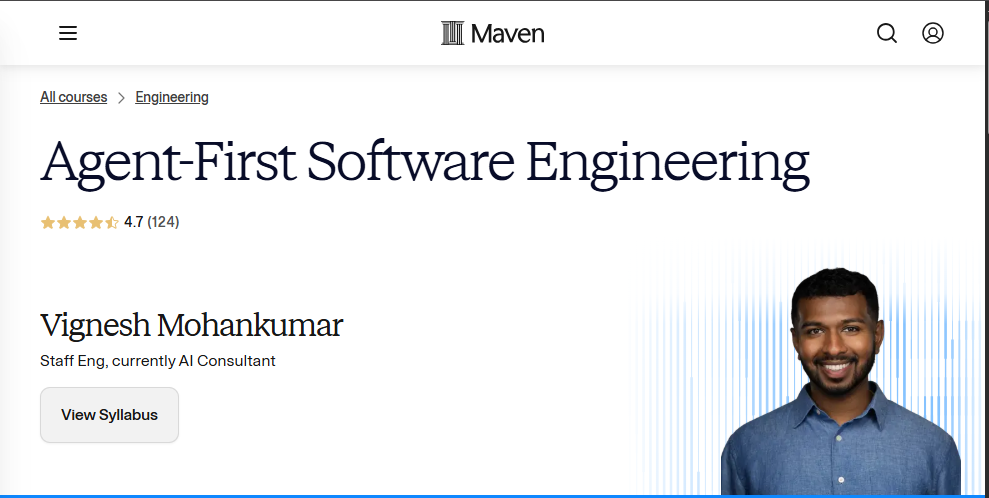
Vignesh Mohankumar – Agent-First Software Engineering
In the rapidly evolving world of AI-driven development, a new paradigm is emerging that is transforming how software is conceptualized, built, and scaled. Vignesh Mohankumar – Agent-First Software Engineering represents a forward-thinking approach where intelligent agents are placed at the center of software architecture rather than treated as add-ons or simple automation tools.
Traditional software engineering has focused on writing deterministic code: define logic, implement features, deploy, and maintain. But with the rise of large language models, autonomous systems, and AI copilots, the role of software is shifting from static logic to dynamic, goal-oriented execution. This shift demands a new methodology—one that rethinks architecture, workflows, and developer mindset.
This comprehensive guide explores the philosophy, structure, tools, real-world applications, and long-term impact of agent-first development in detail.
What Is Agent-First Software Engineering?
Agent-first engineering is a development philosophy where autonomous AI agents are treated as core system components rather than supplementary features.
Instead of asking:
“How do we add AI to our app?”
The better question becomes:
“How do we design our system around intelligent agents from the start?”
An AI agent is not just a chatbot. It is a goal-driven system capable of:
Understanding context
Planning multi-step actions
Using tools and APIs
Maintaining memory
Making decisions
Iterating based on feedback
This fundamentally changes how applications are built.
Why Traditional Development Is No Longer Enough
Modern applications demand:
Personalization at scale
Real-time decision-making
Automation of complex workflows
Intelligent data processing
Human-like interaction
Rule-based systems struggle to handle ambiguity and dynamic requirements. Agent-driven systems, however, thrive in uncertain environments.
In the past, automation followed predefined flows:
Now, with AI agents:
This evolution requires developers to think beyond rigid control structures.
Core Principles Behind the Framework
The philosophy behind this approach can be broken into several foundational principles.
1. Agents as Primary Actors
Agents are not plugins. They are system orchestrators.
Instead of hardcoding workflows, you define:
Objectives
Constraints
Tools
Context
The agent figures out execution.
2. Goal-Oriented Architecture
Traditional code is instruction-based.
Agent-first design is outcome-based.
You specify:
What success looks like
Available resources
Guardrails
The agent dynamically determines the path.
3. Tool Integration
Agents operate best when connected to:
APIs
Databases
Browsers
Internal services
File systems
A properly engineered agent becomes a digital employee capable of performing real tasks.
4. Observability and Control
Because AI systems can behave unpredictably, robust logging, evaluation loops, and human oversight mechanisms are essential.
Transparency is not optional—it’s mandatory.
Architecture of an Agent-First System
A well-designed agent-first application usually contains:
1. Agent Core
The reasoning engine powered by an LLM or multi-model setup.
2. Memory Layer
Short-term memory (context window)
Long-term memory (vector databases, knowledge graphs)
3. Tool Interface
Structured access to:
APIs
Databases
Web automation
Business logic functions
4. Planning Module
Breaks goals into subtasks and sequences execution.
5. Feedback Loop
Evaluation system to refine outputs and reduce errors.
This modular approach ensures scalability and maintainability.
Developer Mindset Shift
Agent-first development requires engineers to rethink their role.
Instead of writing every line of logic, developers become:
System designers
Constraint architects
Prompt engineers
Evaluation designers
AI behavior supervisors
This does not reduce the importance of engineering—it elevates it to a strategic level.
Real-World Applications
Agent-first systems are already reshaping industries.
1. Customer Support Automation
AI agents handle tickets, escalate when needed, and continuously learn from interactions.
2. Marketing Campaign Management
Agents analyze performance metrics and adjust campaigns autonomously.
3. Data Analysis
Instead of static dashboards, agents answer business questions dynamically.
4. Code Generation
AI coding agents assist with debugging, refactoring, documentation, and testing.
5. Operations Management
Automated scheduling, supply chain optimization, and reporting.
Tools Commonly Used in Agent Engineering
While the philosophy is tool-agnostic, common components include:
Large Language Models (LLMs)
Vector databases
Retrieval-Augmented Generation (RAG)
Workflow orchestration engines
Observability dashboards
Evaluation frameworks
The key is not the tools themselves, but how they are structured within a goal-driven architecture.
Benefits of Agent-First Development
Scalability
Agents can handle thousands of tasks simultaneously.
Adaptability
They respond dynamically to changing inputs.
Efficiency
Reduced manual overhead and repetitive coding.
Intelligence Layer
Applications become proactive rather than reactive.
Faster Iteration
Developers prototype faster by delegating logic exploration to agents.
Challenges and Risks
No emerging paradigm is without obstacles.
1. Hallucinations
Agents may generate incorrect information.
2. Tool Misuse
Improper API calls can create system errors.
3. Security Risks
Autonomous agents require strict access control.
4. Evaluation Complexity
Measuring agent performance is more complex than testing deterministic code.
Mitigation requires:
Guardrails
Output validation
Human-in-the-loop systems
Sandboxing
Agent-First vs Traditional Microservices
| Traditional Microservices | Agent-First Architecture |
|---|---|
| Deterministic logic | Probabilistic reasoning |
| Predefined workflows | Dynamic planning |
| Manual updates | Self-adjusting behavior |
| Static dashboards | Conversational insights |
The difference is not incremental—it is foundational.
How Businesses Can Implement This Model
For organizations wanting to adopt this approach:
Step 1: Identify Repetitive Knowledge Work
Look for processes requiring reasoning but not creativity.
Step 2: Define Clear Goals
Agents require measurable outcomes.
Step 3: Connect Tools Safely
Expose APIs with permissions and logging.
Step 4: Start Small
Pilot with internal workflows before customer-facing systems.
Step 5: Measure and Improve
Track performance metrics and refine prompts and constraints.
The Future of Software Engineering
The shift toward intelligent agents signals a broader transformation in the industry.
In the coming years:
Developers will manage AI teams
Applications will self-optimize
Human-machine collaboration will become standard
Codebases will include reasoning layers
This is not a trend—it is an evolution.
The engineers who understand agent-first design early will have a significant competitive advantage.
Who Should Learn This Approach?
Software engineers
AI developers
Startup founders
Technical product managers
CTOs
Automation specialists
Anyone building scalable digital systems should understand this methodology.
Long-Term Industry Impact
As agent-based systems mature:
SaaS products will become autonomous services
Internal tools will act as digital employees
Enterprise workflows will become largely automated
AI-native startups will outperform legacy systems
The transition will not happen overnight, but momentum is accelerating.
Conclusion
Vignesh Mohankumar – Agent-First Software Engineering introduces a transformative way to build intelligent, scalable, and adaptive systems. By placing AI agents at the center of architecture rather than at the edges, developers unlock new possibilities for automation, reasoning, and efficiency.
This approach demands a mindset shift—from rigid logic to goal-driven orchestration. It challenges traditional patterns while offering unmatched flexibility and innovation potential.
The future of software will not just execute instructions. It will reason, plan, adapt, and evolve.
Engineers who embrace this shift today are preparing for the next generation of intelligent systems.



Reviews
There are no reviews yet.